CONTACT US TO PLAN YOUR TOUR NOW
Tel: +256705452806 / +256788354821
Email: info@exclusivegorillavacations.com bookings@exclusivegorillavacations.com
Monday – Friday ( 8am-5pm) Satuday (9am-3pm)
Packing for a safari is not like packing for a beach holiday. In Tarangire, the days can be hot and dusty, the mornings can be surprisingly cold, and the sun does not forgive anyone who forgets a hat. We get asked this question constantly by guests planning their trip: So what to Wear on a Safari in Tarangire National Park?
The short answer is to dress in light layers, choose neutral colours, and leave the bright white and camouflage at home. But there is more to it than that, and getting it right makes a real difference to your comfort, whether you are staying in the park or visiting for the day. This guide covers everything you need to know so you can pack with confidence and focus on the elephants rather than your clothes.
The most common mistake first-time safari travelers make is packing only for heat. Yes, Tarangire is warm during the day, often reaching 28 to 32 degrees Celsius by midday. But a Tarangire safari starts early. If you are visiting on a day trip from Arusha, that usually means a pickup around seven in the morning, and at that hour, especially in the dry season from June to October, the air can be genuinely cold, particularly in an open safari vehicle moving at speed.
Guests staying inside the park feel the same chill on their sunrise game drive. If you are still working out how to get from Arusha to Tarangire National Park, our route guide covers every travel option in detail. This is why layers matter more than any single item you pack.
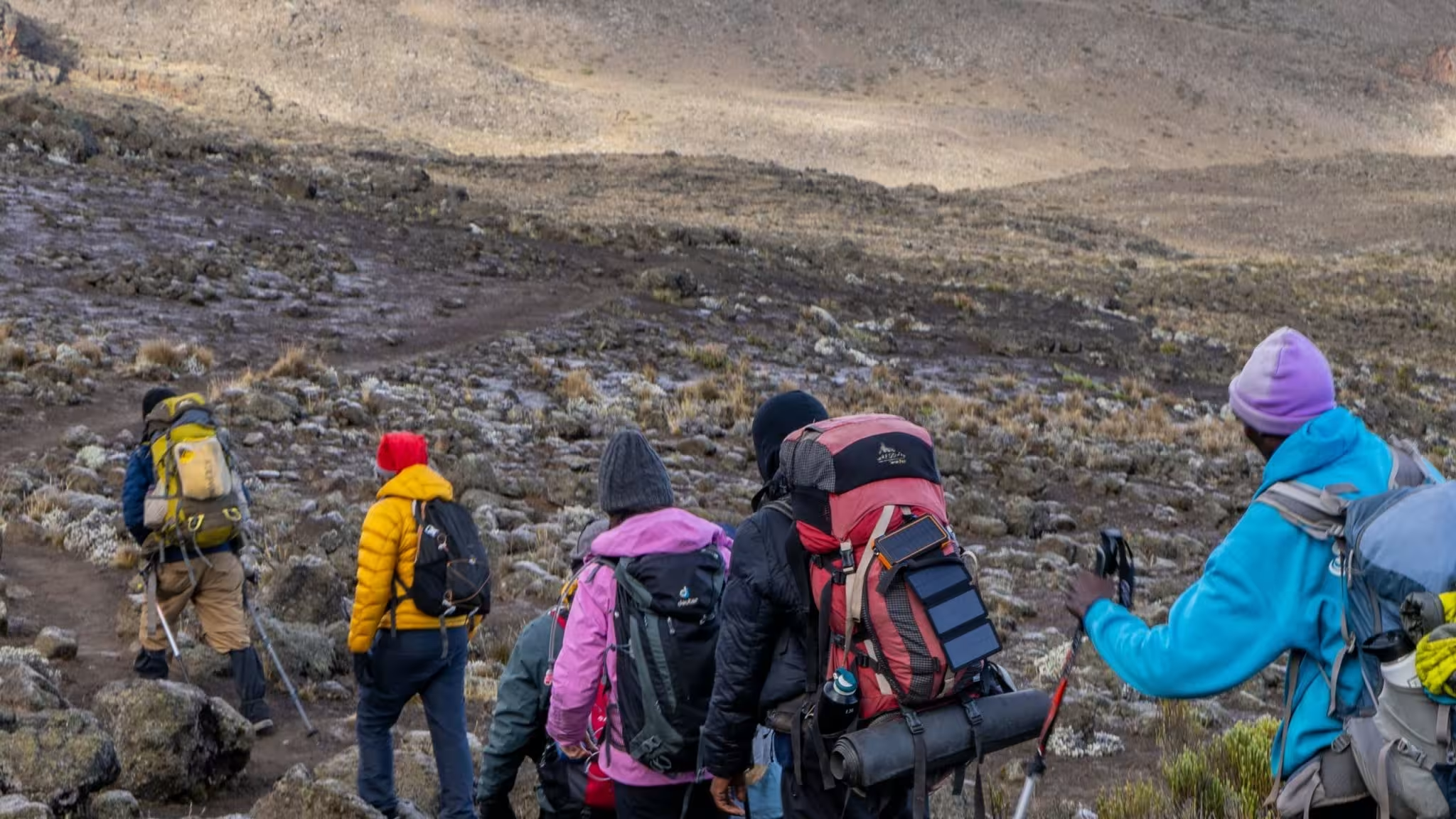
Here is how our guides explain it to guests. Think of your clothing as three simple layers. The first is a light base layer, such as a cotton t-shirt. The second is a mid-layer, like a fleece or a soft sweater, which you will wear for the first two hours of the morning. The third is a windproof outer layer, which protects you from the cold wind and the dust that kicks up behind the vehicle.
By mid-morning, most people peel off the outer layers and tie them around their waist. By late afternoon, when the sun drops, the layers go back on. If you are traveling in the green season, from November to May, the days are warmer but the rain can arrive suddenly, so a light rain jacket belongs in your day bag as well. This layering system is the single most useful piece of safari clothing advice we can give you, and it works just as well for a two-week Tanzania safari as it does for a single morning in Tarangire.
Colour choice on a Tarangire National Park safari is not just about style. It is about practicality and respect for the wildlife. After years of guiding guests through Tarangire, we have seen first-hand how a bright red jacket makes elephants pause and turn away, and how white trousers turn brown within the first hour of a dusty game drive.
Neutral tones such as khaki, beige, olive green, light brown, and sand blend into the bush and do not draw attention. These are the colours our guides wear themselves, day after day, because they work in every season and in every part of the park.
There are two reasons to avoid white, red, and neon yellow. The first is the dust. Tarangire is famous for its red laterite soil, and that dust finds its way onto everything. White clothing shows every speck within minutes. The second reason is the wildlife. Bright colours stand out sharply against the dry landscape and can make animals nervous, especially on walking safaris.
Very dark colours like black and navy have their own problems, because they absorb heat and attract tsetse flies, which are common in the wooded areas of Tarangire. Camouflage patterns should be avoided altogether, because in Tanzania they are associated with the military and are not appropriate for civilian visitors. If you are wondering what colours to wear on a safari in Tarangire, think of the landscape itself, and dress to match it.
Footwear is where many travelers get it wrong. Flip-flops and sandals are fine around the lodge or at the pool, but they are not suitable for a game drive or any kind of walking in the bush. For game drives and walking safaris, you need closed shoes with a decent grip. Lightweight hiking shoes or sturdy trainers are perfect. They protect your feet from thorns, stones, and insects, and they are comfortable for long days in the vehicle.
If you plan to do a walking safari, which some camps in Tarangire offer, choose shoes with a proper sole and ankle support, because the ground is uneven and the grass can hide holes and rocks. Bring a pair of sandals for the evening, but keep the closed shoes in your day bag at all times. Our guides carry their own walking shoes in the vehicle on every trip, and we recommend guests do the same.
This is one of those small details that separates a comfortable safari from an uncomfortable one, and it matters whether you are based in a lodge inside the park or driving in from Arusha for the day.
To make this easy, here is a short packing list you can copy into your notes before you travel. Pack two or three light long-sleeved shirts, two pairs of neutral lightweight trousers, one fleece or light sweater, one light rain jacket, one wide-brimmed hat, one scarf or buff, one pair of sturdy closed shoes, one pair of sandals for the evening, sunglasses with a strap, insect repellent, sunscreen, and a small day bag.
Keep the day bag light, with water, sunscreen, a hat, and your camera, because you will carry it in the vehicle all day. Two or three outfits are usually enough for a short Tarangire safari, especially since most lodges offer same-day laundry. If your Tanzania safari continues on to the Serengeti or Ngorongoro Crater after Tarangire, the same list works for those parks too, because the conditions are similar.
The Tanzanian sun is strong, and Tarangire sits in a dry region where shade can be scarce at midday. A wide-brimmed hat is essential, and a cap works too but protects less of your neck. A lightweight scarf or buff is very useful. You can wet it and wrap it around your neck to stay cool, or pull it over your face when the dust kicks up behind the vehicle. Sunglasses with UV protection are important, and a strap helps so they do not fly off during a bumpy game drive.
For insects, especially mosquitoes in the evening and tsetse flies in some areas, light long sleeves and long trousers are your first defence. Apply insect repellent to exposed skin, and consider treating your clothing with permethrin before you travel if you are sensitive to bites. Many safari lodges provide repellent, but bringing your own is safer. Guests who stay overnight in the park should also pack a light long-sleeved shirt for dinner, when the mosquitoes come out and the temperature drops.
Just as important as what to pack is what to leave behind. Avoid bright white, neon colours, and camouflage prints. Avoid heavy jeans, thick jackets, and anything that cannot get dusty. Avoid new expensive shoes that might blister your feet on a long day. Avoid strong perfume or cologne, which can attract insects. And avoid flashy jewellery on game drives, both for safety and for comfort.
If you remember one rule, remember this: dress for the dust, the sun, and the wildlife, and you will be comfortable all day, whether you are on a Tarangire day trip or settling in for a week-long Northern Tanzania safari.
Can I wear shorts on a safari in Tarangire? Shorts are fine for lunch stops and evenings at your lodge, but for game drives, long trousers are better because they protect your legs from sun, dust, and insects.
Do I need special safari clothing? No. You do not need to buy expensive branded safari gear. Any light, neutral, comfortable clothing works well. The key is layers, neutral colours, and closed shoes.
What about laundry? Most safari lodges offer same-day laundry, so you can pack lighter than you think. Two or three outfits are usually enough for a short Tarangire safari, and this is especially helpful if you are combining Tarangire with other parks on a longer Tanzania safari.
Is camouflage allowed in Tanzania? Tanzania National Parks (TANAPA) advises visitors to avoid camouflage clothing, as it is associated with military use and is not appropriate for civilian visitors. Neutral khaki and olive tones are the better choice.
What shoes should I wear on a walking safari in Tarangire? Closed shoes with a proper sole and ankle support are best. Trainers or lightweight hiking shoes work well, and they protect your feet from thorns and uneven ground.
The best-dressed safari traveler is not the one with the most gear. It is the one who is comfortable, protected from the sun and insects, and free to focus on the elephants, the baobabs, and the Tarangire River.
Whether you are staying inside the park for several nights, resting at a lodge just outside the gate, or visiting on a day trip from Arusha, the same rules apply. Dress in light layers, choose neutral colours, wear closed shoes, and bring a hat. That is really all you need to enjoy your time in Tarangire.
At Exclusive Gorilla Vacations, we are known for gorilla trekking in Uganda and Rwanda, but our team also crafts complete Tanzania safari packages, from short Tarangire getaways to full Northern Tanzania itineraries that combine Tarangire, the Serengeti, Ngorongoro Crater, and Lake Manyara. We know this park in every season, and our guides dress for it every day, which is exactly why we can tell you what works and what does not.
If you are not sure what to pack for your specific trip, just send us a message. Tell us when you are traveling, whether you are staying in the park or visiting for the day, and what your itinerary looks like. We will give you honest, practical advice based on years of guiding guests through Tarangire and the rest of Tanzania.
Planning a Tanzania safari or a Tarangire stay? Contact Exclusive Gorilla Vacations today, and we will help you prepare for the trip of a lifetime, from what to wear to where to stay.