Tucked away in the southwestern corner of Rwanda, near the borders with Burundi and the Democratic Republic of Congo, lies a rainforest that feels untouched by time. Nyungwe National Park is one of Africa’s oldest and most biodiverse montane forests, covering just over 1,000 square kilometres of ancient trees, misty valleys, and extraordinary wildlife.
For years, Nyungwe was overshadowed by Rwanda’s headline attraction, the mountain gorillas of Volcanoes National Park. That changed in September 2023, when the park was officially named a UNESCO World Heritage Site. The recognition confirmed what conservationists had known for decades: Nyungwe is not just a forest, but one of the most important ecosystems on the continent.
For travellers looking for something beyond the classic savannah safari, Nyungwe delivers. You can track chimpanzees through dense undergrowth, walk among the clouds on East Africa’s only canopy walkway, and spot birds found nowhere else on Earth. Here is everything you need to know about the activities that make this park unmissable.
Nyungwe sits in the Albertine Rift, a geological region that stretches from Uganda through Rwanda, Burundi, and into the DRC. This rift valley is one of the most biodiverse places in Africa, and Nyungwe is its crown jewel.
The forest is home to over 1,100 plant species, 250 of which are endemic to the Albertine Rift. It shelters 13 primate species, more than any other forest in East Africa. For birders, the park is legendary. Over 300 bird species have been recorded here, including 30 Albertine Rift endemics, which represents 81 percent of all known endemic species in the region.
The park’s altitude ranges from around 1,600 metres to 2,950 metres at Bigugu Peak. This creates distinct ecological zones that support an astonishing variety of life. You will see giant tree ferns, orchids, and moss-covered Podocarpus trees that have stood for centuries.
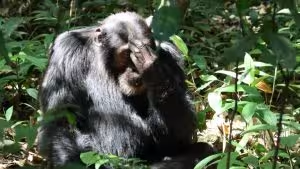
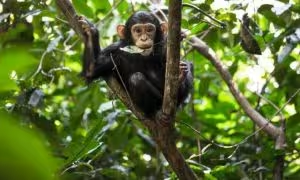
The highlight for most visitors is chimpanzee tracking. Nyungwe is home to three semi-habituated chimpanzee communities, each of which can be visited by a maximum of eight people per day.
Your day starts at dawn. Expert trackers lead you through the dense forest of the Uwinka or Cyamudongo blocks, following the echoes of distant hoots and pant-hoots. When you finally break through the foliage, you get one hour with our closest wild relatives. You will watch them swing through the canopy, groom one another, and forage on the forest floor.
The chimpanzee trekking permit costs $250 per person for foreign non-residents, $75 for foreign residents, and $25 for East African citizens. This covers the one-hour encounter, a knowledgeable park guide, and armed park rangers for security. It does not include the park entrance fee, which is $100 per person for foreign non-residents spending one night in the park.
If you want more time with the chimps, the Chimpanzee Habituation Experience allows you to spend extended hours with researchers following a semi-habituated family. You will observe their behaviour and social dynamics in far greater depth.
Nyungwe is also famous for its colobus monkeys. The park has unique “super-troops” of Angolan colobus monkeys that sometimes number over 400 individuals in a single, coordinated group. Watching a sea of black-and-white fur leaping through the emerald trees is a mesmerising sight.
Tracking usually starts from the Uwinka Visitor Centre, where you set out with a guide to locate these impressive primates. Another smaller group of around 50 colobus monkeys can be tracked from the Gisakura Campsite reception. This activity is included in the standard park entry fee and the primate tracking rate of $40 per person for international visitors.
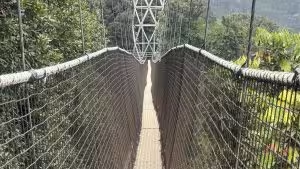
No visit to Nyungwe is complete without the canopy walk. Suspended 50 to 70 metres above a forested canyon, this 160 to 200-metre suspension bridge offers a bird’s-eye view of the ancient tree canopy. It is a thrilling experience as the mist rolls through the valleys below your feet.
The walk starts from the Uwinka Visitor Centre, and the approach takes about 30 minutes through mossy forest with giant tree ferns and orchids. The canopy walk costs approximately $40 to $60 per person. It requires a minimum of two people, so solo travellers pay double unless they join an existing group.
The best time for the canopy walk is the 08:00 or 10:00 session. Afternoon sessions can be cancelled due to high winds, and the bridge may close for safety reasons.
For adrenaline seekers, Nyungwe has a 1,935-metre-long canopy zipline divided into three stages. It is one of the longest ziplines in Africa and lets you fly through the upper layers of the rainforest. The views are spectacular, and the rush is unforgettable.
Nyungwe has over 130 kilometres of walking paths, ranging from gentle nature walks to multi-day treks. The trails start from the Uwinka Visitor Centre and Gisakura Campsite.
The Isumo Waterfall Trail is a guest favourite. This moderately challenging trek winds through tea plantations before entering dense forest, ending at a roaring, multi-tiered waterfall flanked by prehistoric tree ferns.
For serious hikers, the Bigugu Summit Trail ascends to the highest point in the park at 2,950 metres. The full-day hike takes you through distinct ecological zones, from montane forest to bamboo, and rewards you with panoramic views of the Congo-Nile Divide and glimpses of Lake Kivu on clear days. The Bigugu trail costs approximately $115 to $125 for a half or full day, plus guide fees.
For the truly adventurous, the Cyinzobe Hike is a catered three-day trek through the heart of the rainforest. It passes through the Kamiranzovu swamp, with spectacular views, streams, and waterfalls. Overnight stays are in wooden cottages built at the best trail spots.
Nyungwe is a legendary destination for birders. With over 300 avian species, it is a primary destination for Albertine Rift birding safaris. With the help of specialised private guides, you can check highly sought-after regional endemics off your life list, including the stunning Ruwenzori Turaco, the brilliant Great Blue Turaco, and the elusive Regent Sunbird.
The park’s western section, with higher rainfall and richer soils, offers the best birding opportunities. Birds are most vocal between January and June, though April tends to be the wettest month.
Nyungwe offers more than just wildlife. The park is surrounded by communities that have lived alongside the forest for generations, and several community-based experiences are available.
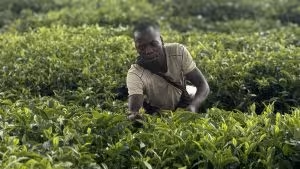
Tea plantation tours are a highlight. Tea is one of Rwanda’s largest exports, and several major plantations, including Kitabi, Gisovu, and Gisakura, are found along the park’s edges. These plantations provide vital employment for local communities and serve as buffer zones around the park.
Cultural experiences include traditional handcrafts, blacksmithing, pottery making, traditional dances, and brewing techniques. These are available in the villages of Banda and Gisakura.
Beekeeping cooperatives near the park headquarters offer insight into traditional practices that have evolved into sustainable enterprises producing honey and candles.
Night walks reveal a completely different side of the forest. Nocturnal wildlife such as galagos, pottos, and tree hyraxes emerge after dark. The rate for a night trek is included in the primate tracking fee of $40 per person.
To truly appreciate the magic of the rainforest, spend at least two to three nights in the region. This gives you time for chimpanzee tracking, the canopy walk, a waterfall hike, and perhaps a day of birding or cultural exploration.
We arrange stays at premium eco-lodges near Nyungwe, including the ultra-exclusive One&Only Nyungwe House, where private villas overlook working tea plantations and the forest edge. Other excellent options include Nyungwe Nziza Eco-Lodge, which offers wooden chalets with fireplaces and panoramic forest views, and Munazi Lodge, an eco-friendly property built with reclaimed wood where you might spot chimpanzees or colobus monkeys from your cabin.
Nyungwe is a rainforest, so showers can happen year-round. The drier months of June to September and December to February offer the best trail conditions for trekking. The wet seasons from March to May and October to November bring lush greenery and excellent birding, but trails can be muddy and challenging.
Nyungwe National Park is much more than a side trip. It is a profound journey into the heart of Africa’s natural history. From tracking chimpanzees through ancient forest to walking among the clouds on East Africa’s only canopy walkway, every experience here connects you with one of the most biodiverse places on the planet.
At Exclusive Gorilla Vacations, we specialise in curating luxury Rwanda safari itineraries that bridge the volcanic peaks of Volcanoes National Park with the deep, misty valleys of Nyungwe. Let us handle your Nyungwe park permits, logistics, private transport, and luxury accommodations to ensure a seamless, world-class vacation.
Ready to explore Rwanda’s rainforest paradise? Contact our team today to start planning your custom Nyungwe adventure.